
Cost & timeline · Torrance, CA
Water Damage Restoration Cost in Torrance, CA
Most water damage jobs cost a few thousand dollars. Nationally, homeowners pay about $1,400 to $6,300, with an average near $3,800, per HomeAdvisor 2025 data. Drying usually takes several days, and repairs after that can take weeks. This page shows what moves the price and how to check an estimate before you sign.
Last checked: November 5, 2026
Quick facts
Quick answer
Typical Water Damage Restoration Cost in Torrance
Plan for a few thousand dollars on a typical job. Small leaks can stay under $1,000, and big losses can pass $16,000. HomeAdvisor puts the national average at $3,841, with most homeowners paying $1,382 to $6,357. Angi lists a Los Angeles average of $3,268, the closest city to Torrance in its data.
No official agency tracks restoration prices in Torrance, so these are national and regional figures from cost publishers. The company that comes out sets its own price after it inspects the damage. We don’t set prices, and calling is free.
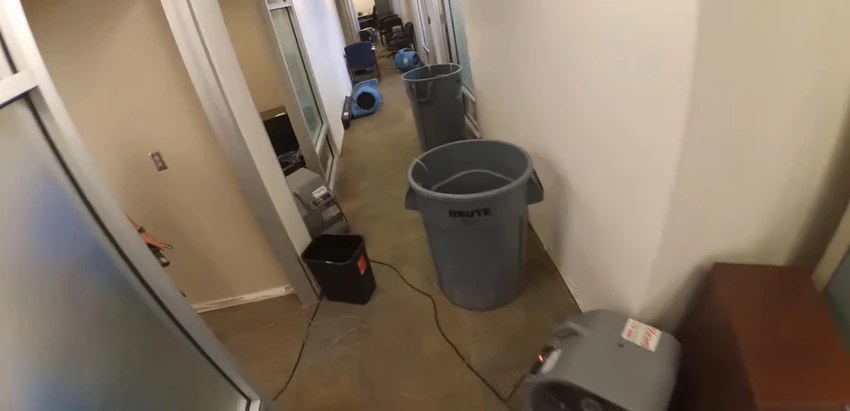
Most bills have two parts. Mitigation is the emergency work: pulling out water, cutting out wet materials, and running fans and dehumidifiers until readings say dry. Rebuild means putting the house back with new drywall, paint, baseboard, flooring or cabinets. Many first estimates cover only mitigation, so ask which one you’re looking at. Our drying process page walks through what happens each day.
By job size
What a Job Costs by Size
Restorers sort damage into classes, mostly by how much got wet. These are HomeAdvisor’s national ranges for each class. The last column is our own math using HomeAdvisor’s $3.50 per square foot average for clean water, to show how size adds up.
| Job size | What it looks like | Typical range (HomeAdvisor) | Clean water example (our math) |
|---|---|---|---|
| Class 1, small | Part of one room, like a leak under a kitchen sink | $150 to $400 | 80 sq ft x $3.50 = about $280 |
| Class 2, one room | A whole room, with water wicked at least 12 inches up the walls | $500 to $1,000 | 200 sq ft x $3.50 = about $700 |
| Class 3, several rooms | Nearly all of one or more rooms | $1,000 to $3,000 | 600 sq ft x $3.50 = about $2,100 |
| Class 4, long-standing | Water that sat a long time, such as flooding | $20,000 to $100,000 | Priced job by job |
Dirty water raises every line. At HomeAdvisor’s $7.50 per square foot for black water, that same 200 square foot room comes to about $1,500 before any rebuild. Repairs come on top: HomeAdvisor lists drywall repair at $300 to $850 and ceiling repair at $450 to $1,600. For a rough number on your own home, try the cost check tool below.
Water Damage Cost and Urgency Check
Answer four quick questions to see a rough national price, how urgent drying is, and what to do next. It takes about 20 seconds.
Rough cost for this size
Do this next
Price uses HomeAdvisor national averages: about $3.50, $5.25 and $7.50 per sq ft for clean, gray and black water. Mold timing is from the EPA mold guide. Your written estimate is the number that counts. Nothing you enter here is saved or sent.
Price factors
What Drives the Price Up or Down
These six things move the bill most.
Water category
Clean water from a supply line averages about $3.50 per square foot, gray water from a washer or dishwasher about $5.25, and sewage about $7.50, per HomeAdvisor. Dirty water means safety gear, extra cleaning and more materials thrown out.
Square footage
More wet area means more machines and more labor. A good crew prices the area a moisture meter shows is wet, not just the spots that look damp.
Materials
Carpet pad and drywall are cheap to cut out and replace. Hardwood, plaster and built-in cabinets cost more, with gray water hardwood at $10 to $15 per square foot on HomeAdvisor. About 74% of Torrance homes were built between 1950 and 1979 (SCAG), and older finishes can be hard to match.
Time before drying starts
Water that sits keeps soaking into framing and subfloor. The EPA says to dry wet areas within 24 to 48 hours to prevent mold, so a slow start can turn a drying job into a tear-out job.
Rebuild
Drying and rebuild are often priced separately. Drywall replacement alone runs about $1.50 to $3 per square foot, per HomeAdvisor, before paint, baseboard or flooring.
Mold
If mold has already started, remediation adds about $1,100 to $3,400 nationally, per HomeAdvisor. Our mold removal page explains what that work involves.
Timeline
How Long Drying and Repairs Take
Most drying jobs take several days, and repairs take longer. The times below are typical ranges, not promises. Moisture readings, not the calendar, decide when drying is done.
| Stage | Typical time | What changes it |
|---|---|---|
| First call to arrival | Often the same day | Time of call, how busy local crews are |
| Water removal and tear-out | First visit, a few hours | How many rooms, what has to come out |
| Drying | 3 to 5 days for a small clean leak, 3 to 7 for most jobs, 5 to 10 for sewage or flooding | Water category, materials, indoor humidity |
| Mold risk window | 24 to 48 hours if things stay wet (EPA) | How fast drying starts |
| Insurer acknowledges your claim | Within 15 calendar days of notice (10 CCR 2695.5(e)) | When you report it |
| Repairs | 1 to 2 weeks for a small room, 6 weeks or more if cabinets or floors come out | Permits, material orders, insurance approval |
Near the coast in Hollywood Riviera and West Torrance, damp marine air can slow drying, so dehumidifiers matter as much as fans. If the home seems dry, ask to see the readings, and put any request to remove equipment in writing.
Reading an estimate
How to Read an Estimate and Avoid Overcharges
Get a written estimate before work starts. The California Department of Insurance advises getting written bids from licensed contractors with prices listed line by line. Then check these points.
Insurance
Will Insurance Pay, and How Does the Deductible Work?
Homeowners insurance usually pays for sudden water damage from inside the house, minus your deductible. The CDI calls the deductible the portion of the loss you pay before your insurance company begins to pay. It also says homeowners policies do not cover flood damage. Flood needs its own policy, and a new one typically has a 30 day wait, per FEMA.
For a small leak, compare the estimate with your deductible before you file. If the job costs only a little more than the deductible, paying yourself may make sense, since claims can affect renewals. For a bigger loss, report it right away. Your insurer then has 15 calendar days to acknowledge it, send forms and start investigating.
The CDI says your insurer will reimburse reasonable costs to protect your property, as long as you save receipts. If the home isn’t safe to live in, keep receipts for a hotel or rental too, since loss of use coverage may pay. Emergency drying shouldn’t wait for the adjuster. Before repairs start, though, LA County Consumer and Business Affairs suggests asking whether your insurer needs to inspect, and whether it pays the contractor directly or pays you.
Ask before you sign
Payments
Deposits, Payments and When a License Is Required
California limits what a contractor can take up front. Under Business and Professions Code 7159.5, the down payment on a home improvement contract can’t be more than $1,000 or 10% of the contract amount, whichever is less. On a $5,000 job, that means $500 at most. After that, the same law says the contractor can’t ask for more than the value of the work already done.
Any job of $1,000 or more in labor and materials needs a contractor licensed by the CSLB. You can check a license by phone at (800) 321-2752, and the name should match your contract. The CSLB also warns against paying cash and against letting payments get ahead of the work.
Hold the final payment until the job is finished and you have lien releases, as LA County Consumer and Business Affairs advises. The county also notes you can usually cancel a home improvement contract within 3 business days, or 5 if you’re 65 or older, and 7 after a declared major disaster. Our resources page links to each of these agencies.
FAQ
Cost and Timeline Questions
Still not sure what to do?
Tell us what got wet and when it started. Calls are answered day and night, and it costs nothing to ask.
Water in Your Home Right Now?
Shut off the water, take your photos, and call. A local crew will ask a few questions, give you a time, and start drying once you approve the work.